
Fibroids are one of the most feared and misunderstood health conditions in women. They are also the most common pelvic tumors found in women. Now, before you hear the word “tumor” and think of cancer, let’s be clear: fibroids are non-cancerous growths and are rarely cancerous. In fact, the chances of a fibroid becoming cancerous are less than 1 in 1000.
Why Are Fibroids More Common in Black Women?
Fibroids affect women of all races, but studies show that Black women are at a significantly higher risk.
Fibroids develop earlier in Black women than in other races.
Black women are 2-3 times more likely to undergo fibroid surgery.
While only 7% of white women between 18-30 have fibroids, the percentage is 25% for Black women—rising to 60% by age 35.
Symptoms of Fibroids
Many women with fibroids experience no symptoms at all. In fact, only 1 in 3 women with fibroids will have noticeable symptoms.
When symptoms do occur, they may include:
– Heavy or painful periods
– Abdominal or lower back pain
– Pain during sex
– Frequent urination
– Constipation
– Pregnancy complications or, in rare cases, infertility
Since fibroids most commonly develop during a woman’s reproductive years (ages 30-50), they can be especially concerning for women who are trying to conceive.
Where Do Fibroids Grow?
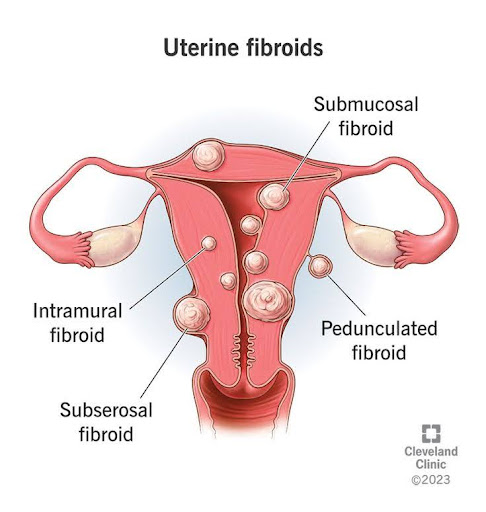
Fibroids can develop in different parts of the uterus, and their location can influence the symptoms a woman experiences.
– Submucosal Fibroids – Grow inside the uterine cavity and can cause heavy bleeding and infertility.
– Intramural Fibroids – Grow within the muscle wall of the uterus, often leading to pain and heavy periods.
– Subserosal Fibroids – Grow on the outer surface of the uterus and may press on nearby organs, causing back pain or frequent urination.
– Pedunculated Fibroids – Grow on stalks, resembling mushrooms. These can cause severe pain if twisted.

Can Fibroids Cause Infertility?
While fibroids can affect pregnancy, they are responsible for less than 2% of infertility cases.
Most women with fibroids are able to:
– Get pregnant naturally
– Have a healthy pregnancy
– Deliver without complications
However, if fibroids interfere with the uterus’s ability to support a pregnancy, medical intervention may be necessary.
What Causes Fibroids?
The exact cause of fibroids is still unknown, but two major factors have been identified:
– Hormones – Fibroids have been linked to estrogen, the hormone produced by the ovaries. They tend to shrink when estrogen levels drop, such as after menopause.
– Genetics – Fibroids often run in families, meaning if your mother or sister has fibroids, your chances of developing them are higher.
How Are Fibroids Diagnosed?
The good news is that fibroids can be treated, and there are multiple options depending on the severity of symptoms and a woman’s reproductive goals.
Non-Surgical Procedures
– Endometrial Ablation – A procedure to reduce heavy bleeding by removing the lining of the uterus.
– Uterine Artery Embolization (UAE) – A procedure that shrinks fibroids by cutting off their blood supply.
Medication
– For symptom relief – Medications like Tranexamic acid, contraceptive pills, NSAIDs, and Progestogen can help reduce heavy bleeding and pain.
– To shrink fibroids – GnRH analogs can temporarily reduce fibroid size but are not a long-term solution.
Surgical Treatment
– Myomectomy – Removes fibroids while keeping the uterus intact. Ideal for women who still want to have children.
– Hysterectomy – Removes the entire uterus. This is a permanent solution and is recommended for women who have completed childbearing or have severe symptoms.
Fibroids Are Not a Death Sentence
While fibroids can be painful and disruptive, they are not life-threatening, and effective treatment options are available.
If you have fibroid symptoms, seek medical advice. A doctor can help you determine the best treatment plan based on your personal needs and reproductive goals.
Where there’s help, there’s hope.